
Stay, Improve, or Move?
Home Decisions · Essex County, NJ
Stay, Improve, or Move?
Selling is only one of three honest answers when a house stops fitting. Here is a calm way to weigh all three before you decide.
8 minute read
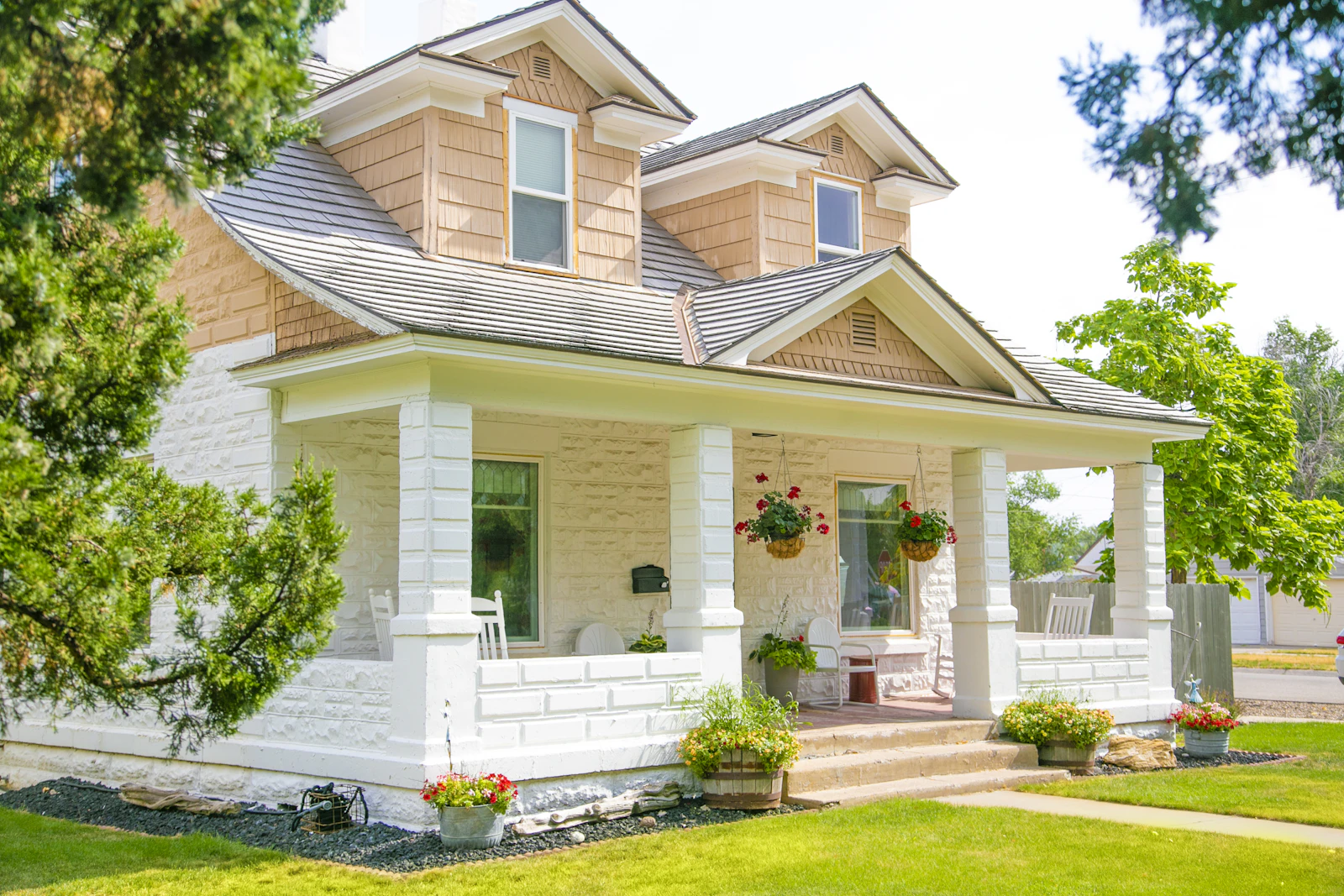
Every spring and fall, I hear some version of the same sentence from homeowners in Bloomfield, Nutley, Montclair, and Verona: “I think we’ve outgrown the house.” Sometimes that is true. Just as often, what they have outgrown is a dated kitchen, a long commute, a flight of stairs, or a monthly bill. Each of those has more than one fix.
After more than 25 years in a high school classroom, I learned that a student who says “I can’t do this problem” usually has not yet worked out what the problem is asking. Housing decisions work the same way. Before anyone mentions a listing, it helps to name what is really bothering you. That is what this article is for.
Start With the Real Problem, Not the Solution
Think of your home as a favorite pair of boots. When they begin to hurt, you have three choices: keep wearing them, take them to a cobbler, or buy a new pair. A sensible person works out whether the trouble is the sole, the fit, or one stiff seam before choosing. A house deserves the same patience.
Try finishing this sentence in writing: “I wish my home had ______.” Be specific. “More room” is vague. “A place for two people to work from home without sharing the kitchen table” is something you can solve. Most problems fall into one of three groups.
Space problems
Too few bedrooms, a closed-off kitchen, or nowhere to work can often be improved in place, depending on your lot, local zoning, and budget.
Life-stage problems
Stairs that get harder every year, a yard that has become a chore, or a wish to live closer to family rarely get solved by adding a dormer. These tend to point toward a move.
Money problems
If the pressure comes from taxes, upkeep, and utilities, all three options deserve a hard look with real numbers. A smaller home is not automatically cheaper once you count closing costs and a new mortgage.
Three Honest Options
Stay
Best when the house mostly works and the timing is wrong. You keep your mortgage terms, your neighbors, and your routine, and you plan for what is aging.
Improve
Best when the location is right and the layout is not. You spend on how you live today, with a clear budget and a plan for permits.
Move
Best when the need itself has changed: size, stairs, commute, or cost. It is the biggest step, so go in with the full picture of the numbers.
Staying Put Is a Real Decision
Staying is often treated as what you do when you have made no choice. I would argue the opposite. Staying on purpose, with a plan, is a decision like any other.
What staying protects
A mortgage rate you locked in some years ago may be meaningfully lower than what is offered now. Familiar neighbors and a short walk to the train in Glen Ridge or Bloomfield matter too, even though they never appear on a closing statement.

What staying quietly costs
A roof, boiler, or set of windows near the end of its life does not get cheaper by waiting. If you plan to stay, start a maintenance fund now. Staying and ignoring the house is the one version of this choice I would encourage you to avoid.
When Improving Makes Sense
Improving fits best when you like the town, the street, and the commute, and the house is the only mismatch. Many homes across Essex County, from Maplewood to Cedar Grove, were built decades ago with layouts that suited another era. Opening up a kitchen or finishing a lower level can change how a house lives.
Start with the estimate, not the inspiration
Get at least two written estimates before you fall in love with a plan. Ask your town’s building department which permits you will need. Some Essex County towns have historic-preservation or design review for certain properties, and that can affect both timing and cost.
Improve for living, not for resale
Renovations rarely return every dollar when you sell. That is fine if you will enjoy the work for ten years. It is a weak reason to renovate if you plan to leave in two.
The best decision is rarely the fastest one. It is the one you can still explain to yourself five years from now.
When Moving Makes Sense
Sometimes the house is not the right size or shape for the life you are living now, and no renovation changes that. A move-up buyer with a growing family, or an empty nester who wants one-floor living and less upkeep, may be making a perfectly sound decision.

Count the full cost of a move
Selling and buying includes agent fees, closing costs, moving expenses, possible repairs before listing, and almost certainly a different mortgage. Ask for each number in writing, then compare the total to the cost of fixing the problem where you are.
Look at what you would be leaving
Value is not only financial. If moving means giving up a walkable street in South Orange or a neighbor who has watched your kids grow up, put that on the list too.
The Three Options Side by Side
| Stay | Improve | Move | |
|---|---|---|---|
| Best when | The house mostly works | The location works, the layout does not | The need itself has changed |
| Upfront cost | Lowest, plus a repair fund | Depends on the project | Highest: selling, buying, moving |
| Disruption | Minimal | Weeks to months of construction | A full move |
| Mortgage | Keeps current terms | May add a loan or use savings | New loan, new rate |
| Main risk | Deferred repairs | Going over budget | Moving when a fix would have worked |
A Checklist to Use Before You Decide
- Write down the top three things you would change about your home, in specific terms.
- Ask whether each one can be fixed in place, and get two written estimates.
- Find out what your home would realistically sell for, with no obligation to list.
- Pull your mortgage statement: balance, rate, and monthly payment.
- List the full cost of moving: selling costs, moving, a new payment, taxes, and insurance.
- Name what you cannot replace: neighbors, walkability, schools, nearness to family.
- Choose a timeline: the next twelve months, or the next five years.
- Talk it through with someone who has no reason to push you either way.
Frequently Asked Questions
How do I know whether to renovate or move?
Should a low mortgage rate keep me from selling?
Will a renovation increase my home’s value?
Can I learn what my home is worth without committing to sell?
I am an empty nester. Is downsizing the right call?
In Summary
Staying, improving, and moving are all legitimate choices. The right one depends on what is actually wrong, what each fix would cost, and how you want your days to look in five years. Name the problem, price each option with real numbers, and give yourself time. A good decision rarely needs a rush.
Wondering What This Means for You?
Every homeowner’s situation is unique. Rather than relying on averages or headlines, let’s look at your goals, your timeline, your neighborhood, and the numbers that matter most to you.
Whether you are thinking about staying, improving, or moving, I am happy to offer straightforward guidance with no pressure and no obligation.
Choose what works best for you: In Person • Zoom • Phone
Mobile: 862.202.4790
Office: 888.893.3537
Email: doug.gillespie.realtor@gmail.com
Website: douggillespie.epiquerealty.com
Brookdale Home Advisor – Essex County · EPIQUE Realty
Douglass Gillespie helps buyers, sellers, and downsizers throughout Essex County, including Brookdale, Bloomfield, Montclair, Glen Ridge, Nutley, Verona, and Cedar Grove. Before real estate, he spent more than 25 years as a New Jersey high school English teacher, and he still believes the best decisions come from understanding, not pressure. He holds the NAR Green Designation and the At Home With Diversity® certification. He is also the founder and president of The 100th Monkey Foundation, a nonprofit supporting mindfulness, music, and the arts.
Cell: 862.202.4790 · Office: 888.893.3537
doug.gillespie.realtor@gmail.com · douggillespie.epiquerealty.com
This article is provided for educational purposes only and should not be considered financial, legal, tax, or mortgage advice. Market conditions change over time, and every situation is unique. Consult the appropriate licensed professionals regarding your specific circumstances.
Photo credits: Ian MacDonald, Robin Jonathan Deutsch, and Clay Banks, via Unsplash.
© 2026 Douglass Gillespie • EPIQUE Realty • All Rights Reserved
Categories
- All Blogs (138)
- Crossroads of the American Revolution (34)
- EPIQUE (2)
- Essex County Points of Interest (15)
- Essex County Transition Series (26)
- First Time Home Buyers (22)
- Home Buyer Tips (28)
- Home Seller Tips (39)
- Homeowner Tips (24)
- Lifestyle & Seasonal Guides (53)
- REAL ESTATE 101 (56)
- Washington's Spy Trail (4)
Recent Posts






GET MORE INFORMATION