
How to Host Family Gatherings After Downsizing: Creative Entertaining Ideas for Smaller Homes
Downsizing & Lifestyle • Essex County, NJ
How to Host Family Gatherings After Downsizing: Creative Entertaining Ideas for Smaller Homes
A smaller home doesn’t have to mean a smaller holiday. Here’s how to plan the space, the seating, and the menu so everyone still has a place at the table.
Published October 14, 2026 • 7 minute read

Picture a couple who spent thirty years hosting Thanksgiving in a four-bedroom Colonial. The dining room table had two leaves, the basement held a spare folding table, and nobody ever worried about where the coats went.
Then they downsize to a townhouse in Verona or a condo near downtown Montclair. It is easier to maintain, closer to everything, and exactly what they wanted. But in the back of their minds sits a quiet question: where will everyone sit?
It’s a fair question, and it has good answers. Hosting in a smaller home is less about squeezing in and more about designing the day differently. Think of it like packing a carry-on instead of a trunk. You don’t bring less because you care less. You bring what matters and arrange it well.
Start With the Real Numbers
Before you rearrange a single chair, get honest about what you are actually planning for. Most families discover the picture is smaller than the memory.
Count your “big days”
Write down the gatherings you truly host each year. For many households that’s two or three: a major holiday, a birthday, perhaps a summer cookout. Everything else is a smaller visit. Plan your space around the typical weekend, then add a flexible plan for the big days.
Know what your home does well
Every layout has a strength. Maybe it’s a wide kitchen island, a sunny sitting room, or a patio off the back. Build the gathering around that strength instead of fighting the floor plan.
Think Like a Theater Director: Create Zones
A small stage can host a big play because the director decides where the action happens. You can do the same with your rooms. Instead of expecting everyone to sit in one place, give the gathering a few “scenes.”

- The arrival zone. A bench or hooks by the door for coats, plus a spot for drinks, keeps the entry from clogging.
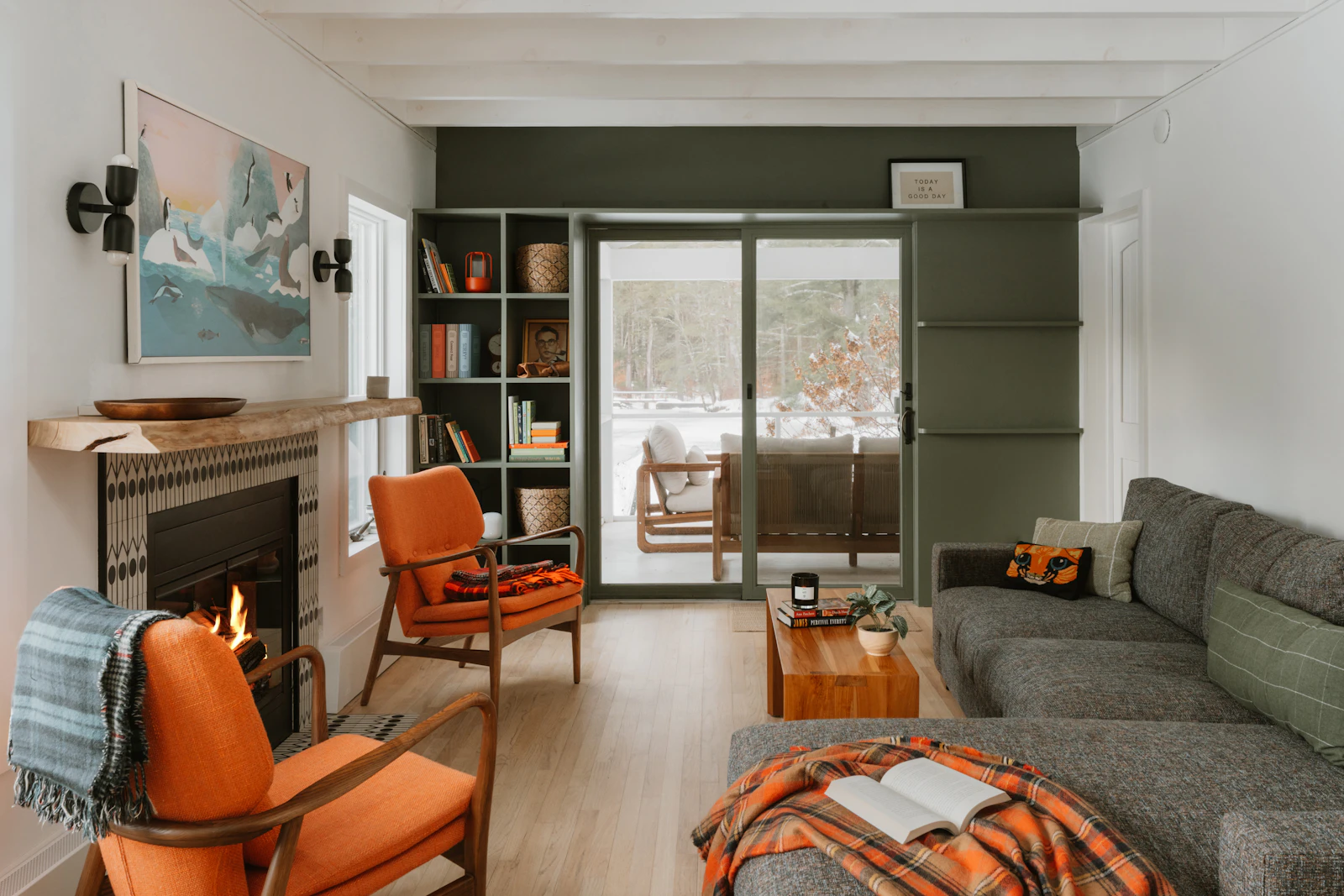
- The conversation zone. Two or three comfortable seats near a fireplace or window, where people can linger with coffee.
- The food zone. A sideboard, kitchen island, or console table where dishes are set out so the dining table stays clear.
- The kids’ corner. A low table with books or a board game, within sight of the adults.
When people have somewhere to go, a full house feels lively instead of crowded.
“Good hosting isn’t measured in square feet. It’s measured in how welcome people feel when they walk in.”
Seating That Stretches
The dining table is usually the first thing people worry about. A few flexible pieces solve most of it.
Choose furniture that does two jobs
A drop-leaf or extendable table, nesting tables, storage ottomans that double as extra seats, and a bench along one wall all earn their place. A bench, in particular, seats more people than individual chairs and tucks away neatly.
Borrow, rent, or share
You don’t need to own enough chairs for your biggest day. Folding chairs and a folding table can be rented for a few dollars, or borrowed from a neighbor or family member. Many people also find it simple to store a single slim folding table behind a closet door or under a bed.
Stagger the day
Instead of one seating for twelve, consider a lunch for some and a dessert gathering for others. Families often enjoy this, because it means longer, more relaxed conversations.
Change the Format, Not the Warmth
Sometimes the best solution is to change how you gather. Here are four formats that work well in compact homes.
| Format | Space needed | Effort | Best for |
|---|---|---|---|
| Seated dinner | One table, extra chairs | Higher | Smaller groups, special holidays |
| Buffet with mixed seating | Sideboard plus several seating spots | Moderate | Medium groups, relaxed afternoons |
| Potluck | Similar to a buffet | Lower | Larger families who like to share the work |
| Drop-in open house | Rooms used in shifts | Lower | Big, spread-out families and friends |
A potluck, in particular, often becomes the new tradition. Relatives who once relied on you to do everything tend to enjoy contributing a signature dish.
Borrow Space From the Outdoors and the Neighborhood
If your new home has a porch, patio, or small yard, it is quietly the largest room you own for half the year. A couple of chairs and a table, some string lights, and a pitcher of something cold can turn it into a second living room.

Think beyond your front door, too. Many Essex County towns allow residents to reserve park pavilions or picnic areas, and a local restaurant or community room may host a larger birthday. Check with your town’s recreation department for current rules and fees. Then you can use your home for what it does best: the warm, familiar part of the day.
Your Small-Space Hosting Checklist
- ☐ Count your real “big days” for the year
- ☐ Pick a format: seated, buffet, potluck, or drop-in
- ☐ Map out your zones: arrival, food, conversation, kids
- ☐ Arrange extra seating: bench, ottomans, rentals, or loans
- ☐ Clear a landing spot for coats and bags
- ☐ Plan food that can be served from a sideboard or island
- ☐ Ask relatives to bring a dish, a chair, or a folding table
- ☐ Have a backup plan for weather if you’re using outdoor space
If You’re Still Choosing Your Next Home
If you haven’t moved yet, this is a useful lens for house hunting. When you tour, look past the square footage and ask how the space would feel on a holiday afternoon.
- Flow between rooms. Can the kitchen, dining, and living areas connect, even loosely?
- Storage. Is there a closet or corner for folding chairs, extra linens, and serving pieces?
- Outdoor space. Even a modest patio or balcony extends your options.
- Parking and walkability. Guests arriving in Glen Ridge, Nutley, or Cedar Grove will appreciate easy parking or a short walk from the train or main street.
- Shared amenities. Some condo and townhouse communities offer a clubhouse or party room you can reserve.
Frequently Asked Questions
How many guests can I realistically host in a smaller home?
It depends on your layout more than your square footage. A buffet-style meal with several seating areas usually works for more people than a single formal table. Walk through your home and count real seats, then plan to stagger or move outdoors for the rest.
Should I keep my large dining table when I downsize?
Only if it fits the new room comfortably and you will use it. Many people choose a smaller extendable table and a bench instead, then rent or borrow extra seating for the biggest days.
How do I tell family that I can no longer host everything?
Kindly and early. Share your new plan before the holidays arrive, and invite others to take part, whether by bringing a dish or hosting one gathering a year. Most relatives are happy to help once they know how.
What should I look for in a home if I love to entertain?
Look for connected living spaces, a kitchen with counter space for serving, usable storage, and some outdoor area. Easy parking and a nearby park or community room are helpful extras.
The Short Version
Downsizing changes the shape of your gatherings, not their meaning. Plan around the real number of guests, create zones, choose flexible seating, pick a format that suits your space, and use the outdoors and your neighborhood when you need more room. The warmth of the day comes from the people, and a smaller home often brings them closer.
Wondering What This Means for You?
Every household’s situation is unique. Rather than relying on averages or headlines, let’s look at your goals, your timeline, your neighborhood, and the details that matter most to you.
Whether you’re thinking about downsizing, preparing to sell, or simply weighing your options, I’m happy to offer straightforward guidance with no pressure and no obligation.
Schedule a Conversation
Choose what works best for you: in person, by Zoom, or by phone.
Email: doug.gillespie.realtor@gmail.com
Mobile: 862.202.4790
Office: 888.893.3537 x706
Website: douggillespie.epiquerealty.com
About the Author
Douglass Gillespie
REALTOR® • NJ Area Leader • Brookdale Home Advisor – Essex County • EPIQUE Realty
Douglass Gillespie spent more than 25 years as a New Jersey high school English teacher before becoming a REALTOR®, and he still approaches every conversation as an educator. He helps downsizers, move-up buyers, and homeowners in Brookdale, Bloomfield, Montclair, Glen Ridge, Nutley, Verona, Cedar Grove, and surrounding Essex County communities. He holds the NAR Green Designation and the At Home With Diversity® certification, and he is the founder of The 100th Monkey Foundation, which supports mindfulness, music, and the arts. His philosophy is simple: honest advice, thoughtful preparation, and no pressure.
Cell: 862.202.4790 • Office: 888.893.3537
doug.gillespie.realtor@gmail.com • douggillespie.epiquerealty.com
Photo credits: Dining table photo by Rubina Ajdary (Unsplash). Living room and porch photos by Clay Banks (Unsplash, Unsplash). All images are used under the Unsplash License.
This article is provided for educational purposes only and should not be considered financial, legal, tax, or mortgage advice. Market conditions change over time, and every situation is unique. Consult the appropriate licensed professionals regarding your specific circumstances.
© 2026 Douglass Gillespie • EPIQUE Realty • All Rights Reserved
Categories
- All Blogs (126)
- Crossroads of the American Revolution (32)
- EPIQUE (2)
- Essex County Points of Interest (13)
- Essex County Transition Series (23)
- First Time Home Buyers (20)
- Home Buyer Tips (24)
- Home Seller Tips (35)
- Homeowner Tips (19)
- Lifestyle & Seasonal Guides (47)
- REAL ESTATE 101 (50)
- Washington's Spy Trail (2)
Recent Posts





GET MORE INFORMATION